A Low-Key Visit That Leaves Space to Talk
Plan a low-key visit around one shared activity, a comfortable setting and an easy finish, so conversation can wander without anyone having to host a show.
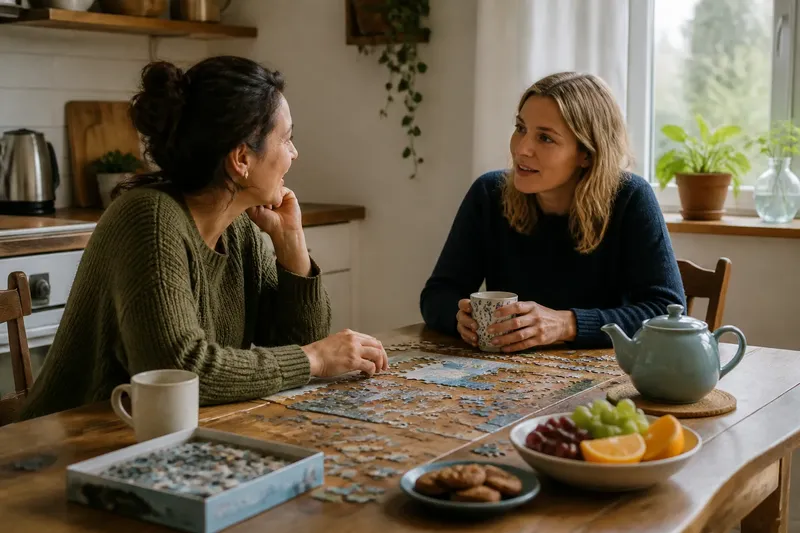
How do you plan a low-key visit that leaves room to talk without making your guest feel responsible for carrying the conversation? Start with one ordinary activity, somewhere comfortable to sit and a clear, easy finish. The aim is not to stage a perfect afternoon; it is to make being together feel natural.
Imagine you have invited a friend over on a Saturday after a full week. You want to catch up, but a formal meal feels like too much work, and sitting opposite each other with nothing to do sounds oddly intense. You decide to make tea and work on a simple jigsaw at the kitchen table. This invented visit shows how small choices can make conversation easier without turning hospitality into a performance.
One shared activity
A useful activity gives your hands something to do without taking over the visit. Choose something familiar, easy to pause and genuinely suited to both of you. A jigsaw, sorting old photographs, sketching, kneading dough or tending a pot of herbs might fit, depending on what you enjoy.
For this imagined Saturday, you choose a puzzle already in the cupboard. You set no target or timer, and nobody has to apologise for putting a piece down. The puzzle can sit untouched while you talk. It is a gentle anchor, not the main event.
Before the visit, consider whether the activity invites conversation or competes with it. A film, a complicated recipe or a game that needs constant attention may leave little room to catch up. If your friend has mentioned being tired or sore, choose something that does not require prolonged standing or extra effort. A message such as “Fancy tea and a puzzle? We can just chat if we’re not in the mood” makes the plan easy to accept or change.
A comfortable setting
Comfort is less about arranging the room for guests than removing small obstacles. In the imagined visit, you clear one end of the kitchen table, leave space for mugs and puzzle pieces, and pull up chairs that do not make either person perch. A coaster and a jug of water are within reach. The rest of the room can stay lived-in.
Think about details that could interrupt the flow: a noisy appliance, bright light, cold draught or chair blocking the doorway. There is no need to remodel the room. Switch off unnecessary background noise, offer a cushion or let your guest choose where to sit. If you have a pet, mention its habits beforehand rather than assuming everyone is comfortable with an eager greeting.
Food can feel welcoming without becoming another task. Put out biscuits or sliced fruit, and ask about dietary preferences when you make the invitation. For the imagined afternoon, tea and a small bowl of fruit are enough; neither requires you to disappear into the kitchen.
A natural arrival
When your friend arrives, show them where to put their coat and offer a drink. There is no need to launch into a list of plans or ask for an immediate account of the week. Settle at the table and begin sorting puzzle pieces. The first few minutes can stay light: a comment about the journey, a question about the weather or a pause while the kettle boils.
Then the conversation wanders. Your friend mentions a difficult conversation at work, and you stop searching for edge pieces. Listen, ask what part has been weighing on them and leave space for an answer. Do not rush to solve the problem or steer the conversation back to the puzzle. Later, the subject shifts to a family recipe, and you return to the pieces while comparing notes.
A low-pressure activity can make silence feel ordinary rather than like a sign that something has gone wrong. Someone can concentrate, sip tea or look for a piece while gathering their thoughts. Let a pause breathe instead of filling it with another question. If a topic feels personal, follow your friend’s lead; a shared table is not permission to press for details.
Room for conversation
A visit feels less like an interview when questions grow from what the other person has already said. In this invented scene, you might ask, “What happened after that?” or “Would you like ideas, or would you rather just talk it through?” The second question distinguishes listening from advice-giving in a way that feels considerate, even during a serious conversation.
Keep your own stories in the exchange, too, but make space for a reply. If every detail of your week arrives in one long monologue, your friend may struggle to find an opening. A small, relevant story can build connection; a gentle check-in such as “Have you had anything like that?” gives them a way into the conversation without demanding one.
Conversation need not stay earnest. You might laugh at a puzzle piece that looks nothing like its supposed section, remember a shared outing or talk about what you are both cooking. A change of subject can be welcome when a difficult topic has run its course. Pay attention to tone and body language, and let your guest signal whether they want to continue or move on.
When should the visit end?
How long should a low-key visit last?
Agree on a loose window when you invite someone, or mention that you are free for the afternoon but need to be home later. This gives both of you a natural sense of the visit’s shape without making conversation feel timed.
What if the conversation goes quiet?
Let the pause sit while you pour tea or look for another puzzle piece. If it feels comfortable, carry on; if either of you seems restless, suggest a change of activity or ask whether they would like a short break.
What if my guest does not like the activity?
Offer an easy alternative, such as leaving the puzzle aside and continuing to talk. The activity was an invitation, not an obligation, and changing the plan can be part of making a guest feel at ease.
How can I signal that it is time to wrap up?
Give a kind, direct cue: “I’ve loved catching up, and I need to start getting ready for tomorrow.” You can offer one last drink or help find a coat, then say goodbye without apologising for having a limit.
A gentle ending
In the imagined visit, your friend glances at the time and says they should head off. You help gather their things; the puzzle remains unfinished on the table. There is no need to rush to complete it or extend the afternoon just to prove it went well. Thank them for coming and mention a detail you enjoyed hearing about, so the goodbye feels connected to the time you shared.
Afterwards, you put the mugs in the sink and leave the puzzle for another day. For a low-key visit, one pause-friendly activity, an easy-to-use space and a considerate ending can take pressure off conversation. What is not worth the effort is preparing an elaborate menu or a packed schedule to make a simple catch-up seem special.