Window Light or a Soft Lamp for a Quiet Evening?
Choose window light or a soft lamp for a quiet evening by noticing glare, privacy and comfort, then shape a calmer room without a complicated routine.
Should you keep the curtains open as daylight fades, or switch on a soft lamp? For a quiet evening, window light and gentle indoor lighting offer different kinds of comfort: one changes with the sky, while the other lets you shape the room more steadily. You do not need to choose a permanent favourite. Start with what the room is doing, then adjust around the way you want to spend the evening.
Notice the room first
Before reaching for a switch, take a moment to notice where the remaining daylight lands. A window may cast a pleasant glow across a wall, or it may leave your chair in shadow while the sky stays bright. That difference matters more than whether the light is technically natural or artificial.
Look at your main evening activity, too. Reading, folding laundry, eating with someone and listening to music place different demands on a room. You might want the table clear and bright enough to see a meal, but prefer the sofa corner to feel softer. Treat the room as several small places rather than one lighting problem.
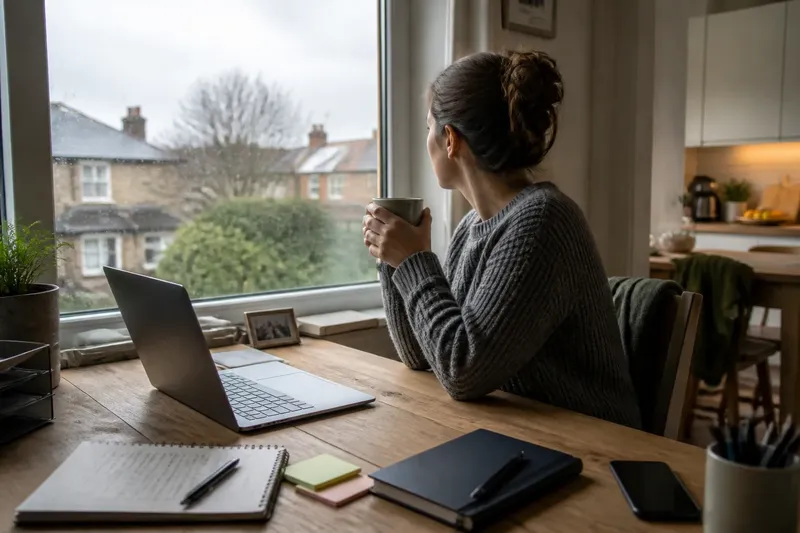
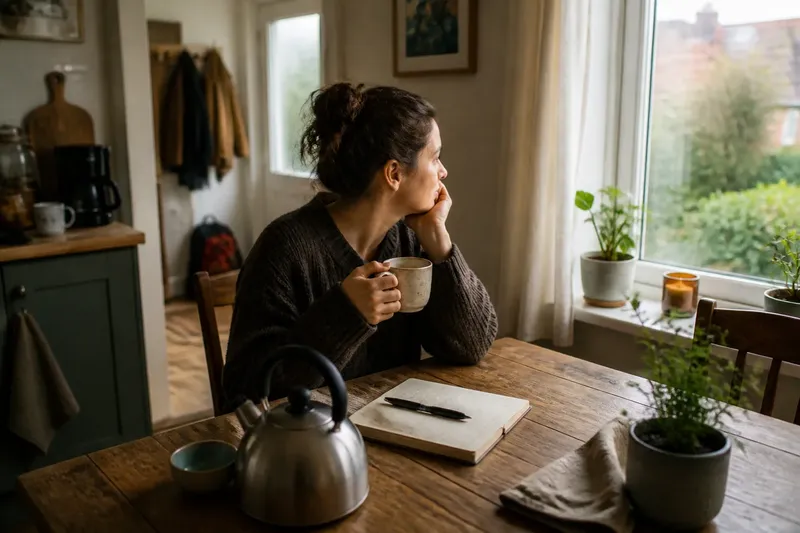
Also notice what is outside. A view of trees or a quiet street may make fading daylight feel restful; a bright neighbouring window, passing headlights or a busy pavement may make it harder to settle. Draw the curtain if the view feels intrusive. Keeping the window uncovered is an option, not a virtue.
Choose your light source
Window light can make an evening feel connected to the weather and the changing sky. Its colour and strength shift naturally, which some people find soothing. It can also disappear before you have finished what you are doing, or produce reflections on a screen and a strong contrast between the window and the room.
A soft lamp gives you more control over where light falls. A shaded table lamp beside a chair can make reading comfortable without lighting every corner. A floor lamp aimed towards a wall can create a gentle spread rather than a bright point in your eyes. The bulb, shade and surface all affect the result: a pale shade tends to let more light through, while a darker or thicker shade can make the lamp feel more contained.
There is no need to turn the choice into a contest. If the daylight is pleasant, enjoy it. When it stops serving the room, bring in a lamp. A mix can feel more natural than insisting on one source from dusk until bedtime.
Adjust the room gradually
Make one change at a time so you can tell what feels better. If you begin with a lamp, place it beside or behind your usual seat rather than directly in your line of sight. If you prefer the window, try leaving the curtains open while the remaining light is comfortable, then draw them when reflections, glare or outside activity become distracting.
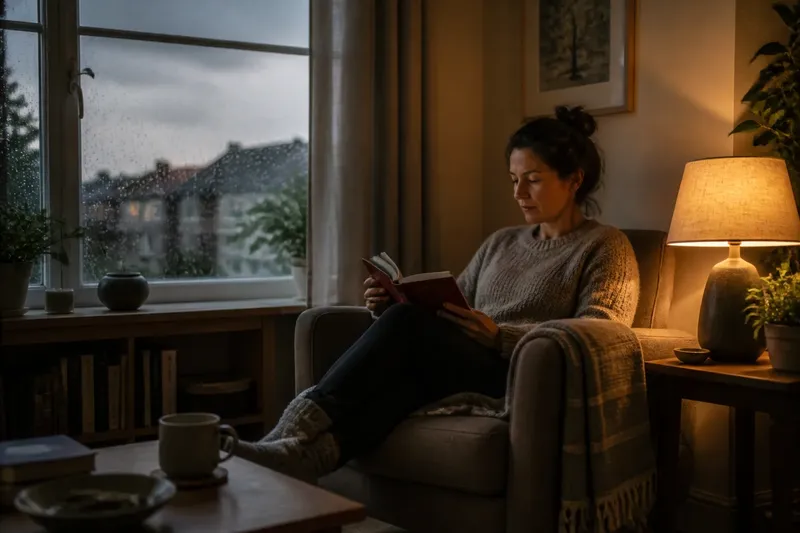
Imagine you are settling down with a paperback while rain clouds darken the window. You leave the curtains open because the soft grey light feels pleasant, but the page becomes difficult to read. You switch on a shaded lamp beside the chair and keep the curtains open until the window begins to reflect the room; then you draw them. The expected result is a readable page and a less distracting view, without making the whole room bright.
For a shared room, ask what the other person is doing before changing the lighting. One person may be reading while another wants to watch a film or talk. A lamp near the reader and a lower level of general light can often keep both activities comfortable. If the room has only one overhead fitting, a plug-in lamp may offer a simpler local adjustment than changing the whole space.
Place lamps for comfort
Think about glare and shadows, not just brightness. A lamp that shines directly into your eyes can feel harsh even if the bulb is not especially bright. A light behind your shoulder may cast your hand’s shadow over a book or craft project. Shift your seat or lamp slightly and notice whether the task becomes easier.
Light-coloured walls and ceilings can reflect a lamp gently around the room. A dark wall, heavy curtains or a large piece of furniture may absorb or block some of that spread. You do not need to redecorate: moving a lamp so it faces a wall, or placing it nearer the area you use, may be enough.
If a lamp has adjustable brightness, use the setting that feels comfortable for the task rather than automatically choosing the lowest one. A dim glow can be pleasant for conversation but frustrating for close work. Conversely, a strong bare bulb can dominate a relaxed room. A fabric or frosted shade softens the view of the bulb; avoid covering a lamp with clothing, paper or other materials.
Make a simple evening choice
Once you know what the room needs, use a small sequence rather than a strict routine:
- Choose the place where you expect to spend most of the evening.
- Check whether fading window light lets you see comfortably without glare or distracting reflections.
- Keep the curtains open if the view and light feel pleasant; close them if privacy or reflections are bothering you.
- Switch on a shaded lamp near the activity that needs it, rather than flooding the whole room.
- After settling in, move the lamp or adjust its brightness if you are squinting, leaning towards the page or feeling that the light is too prominent.
For a small room, a single well-placed lamp may be all you want. In a larger room, two modest pools of light can make separate areas usable without turning on every fitting. A lamp near a favourite chair and another near a table can give the evening a sense of shape, but add one only if you have a real use for it.
What is not worth the effort? Chasing a perfect shade of light or buying several new bulbs before you have tried moving the lamp you already own. Begin with curtains, seating and placement. Change equipment only if the current arrangement keeps leaving a practical problem.
Questions about evening light?
Is window light enough for reading?
It may be, while the sky is still bright and the page is evenly lit. If you need to strain or the window reflects in the page, add a nearby lamp instead of waiting for your eyes to adjust.
Should I close the curtains at dusk?
Close them when privacy, reflections or outside movement make the room less comfortable. If the view is peaceful and the fading light is useful, leaving them open for a while is also reasonable.
Where should a soft lamp go?
Put it near the activity it supports, with the bulb shaded from direct view. For reading, check that your hand and the book are not in a heavy shadow; for conversation, aim for a gentler glow that does not spotlight one seat.
Can I use both window light and a lamp?
Yes. Let daylight set the atmosphere while it feels comfortable, then use a lamp to fill the gap as the room darkens. You can close the curtains later if reflections or privacy become an issue.
Let comfort decide
There is no ideal evening arrangement to copy from someone else’s home. The right choice depends on your view, the room’s surfaces, what you are doing and whether you want the outside world to remain part of the scene. Window light or a soft lamp for a quiet evening can be a changing decision: begin with the light already there, add only what helps, and let comfort—not a rule—tell you when to adjust.
One useful detail is to leave a lamp switch easy to reach from your usual seat. That small convenience makes it simpler to respond when the sky dims or the activity changes, without interrupting the calm you were trying to create.