The Walking Meeting Before It Had a Name
A walking meeting can make a conversation feel less formal. Choose a route, topic and pace that suit both people, and know when sitting down works better.
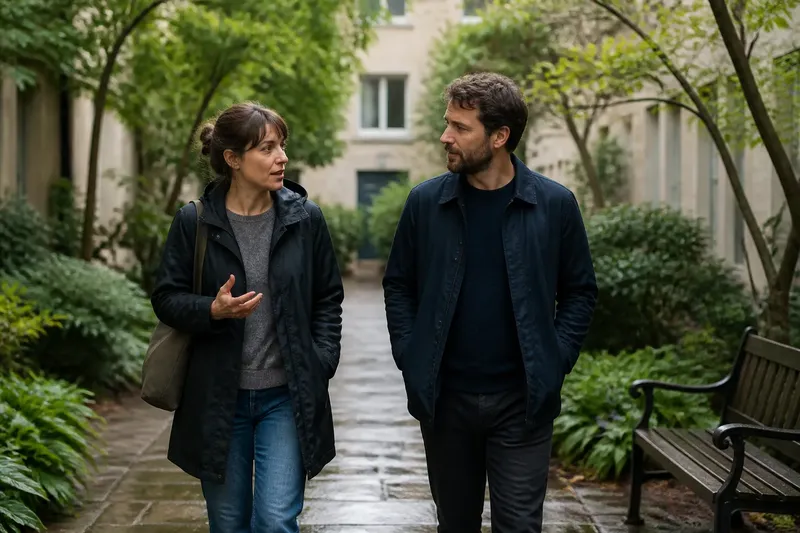
Would a walking meeting make this conversation easier to have? A walking meeting moves a discussion from a table to a shared route, and the change can suit open-ended topics that do not need screens or papers. The practical question is not whether walking is better, but whether the route lets both people listen, speak and take part comfortably.
Conversation and movement
At a table, attention gathers around faces, notes and whatever sits between the speakers. That arrangement is useful when people need to examine a document or make a precise decision. It can also make an uncertain conversation feel formal before it begins.
Walking side by side changes the arrangement. People can look ahead rather than hold eye contact, and the route provides a shared focus when a thought takes a moment to form. For some, that feels more relaxed; for others, the surroundings make it harder to concentrate. Neither response needs to be corrected.
A walking meeting is not a way to make someone disclose more, or to turn a difficult topic into an easy one. It is simply another setting to consider. Ask the other person what they would prefer, especially if the conversation is sensitive or their comfort with walking is uncertain.
Route and access
Choose somewhere simple to follow: perhaps a quiet park path, a broad pavement on a calm street or a level courtyard loop. A route with fewer crossings and little background noise makes it easier to hear each other. Familiarity can matter more than scenery; neither person should have to spend the conversation working out where to go.
Check that the route works for both walkers. Consider the surface, pace, places to rest and whether there is an easy way to turn back. A short, level path with a bench may suit the conversation better than a longer route. If one person uses a mobility aid or would rather not walk, ask what alternative would make the discussion accessible; do not make participation depend on keeping up.
Weather and privacy may change the choice. Wind can swallow words, a crowded path can make a personal topic uncomfortable, and poor conditions may leave people focused on getting indoors. Agree on a nearby seated option or a quiet room before setting off if the weather is uncertain or the subject calls for privacy.
Purpose and pace
Before leaving, agree on the point of the conversation. It might be to explore an idea, talk through a concern or identify what information is still missing. For a work discussion, say whether you hope to make a decision or simply clarify the question. A modest aim helps keep the walk from becoming an aimless chat.
Keep the pace easy enough for speaking without strain, and let either person suggest stopping. You do not need to fill every quiet moment. If the route gets noisy or the topic turns out to need documents, change the plan instead of trying to make the setting work at all costs.
Say you and a colleague have a project decision to discuss, and the starting point is that neither of you knows whether the delay comes from missing information or an unresolved choice. You ask whether they would prefer a walk or a table, then suggest a quiet courtyard loop; they agree, and you both walk at a pace that allows conversation. You ask which information is still missing, and the colleague identifies a document the team has not reviewed. The resulting decision is to examine that document at a desk before choosing a direction: the walk has clarified the next action, but not settled the project decision.
If a point needs recording, pause somewhere safe and write it down, or send a short follow-up afterwards. Trying to type while moving is awkward and can distract from the route. For a meeting with several people, check that the path allows the group to stay together and that everyone can hear; a seated format may be fairer if the conversation needs equal, uninterrupted contributions.
Walking meeting questions?
Which topics suit a walking meeting?
Open-ended conversations, informal catch-ups and early discussion of a problem can work well if both people are comfortable walking. Choose a seated meeting when the topic depends on documents, detailed notes, a screen or privacy that a public route cannot offer.
How long should a walking meeting last?
Let the subject and each person’s comfort guide the length rather than treating the walk as an exercise target. Stop when the conversation has reached a natural point, or sooner if the route or pace is not working.
What if someone would rather sit?
Take that preference as a clear answer, not an objection to overcome. Offer a seated setting or another accessible option, and let the conversation matter more than its format.
How should decisions be recorded?
For an informal exchange, agree to write down the main point afterwards. If the discussion needs precise actions or a record, pause in a safe place to note them or move to a table.
Signs to change course
Notice whether both people can hear and keep a comfortable pace. If one is straining to listen, rushing, repeatedly checking the route or losing the thread, suggest a quieter path, a pause or a seated conversation. A change of setting is useful information about what the discussion needs.
It is not worth searching for a perfect route, tracking distance or turning every conversation into a walk. A nearby path or courtyard can be enough, and sitting down is often the simplest choice. Do not use a stroll to sidestep preparation, interpretation, privacy or written material; plan around those needs instead.
A walking meeting works when the setting supports the people and the purpose. Before suggesting one, consider the topic, access, noise and privacy, then offer a genuine choice. For a walking meeting, the most useful outcome may be a clearer next action—or a timely decision to continue at a table.